Tile Adhesive and Self-Levelling Mortar: A Selection Guide for Importers
Direct answer: Tile adhesive and self-levelling mortar are frequently specified by nickname, which is why so many orders arrive with mismatched expectations. This guide walks importers through substrate condition, layer thickness, performance class, open time, and the specification fields that should be fixed before a quotation is issued.
Two products, two different failure modes
Tile adhesive and self-levelling mortar are often bought together and quoted together, but they fail for different reasons. Knowing which failure mode you are protecting against is the fastest way to write a usable specification.
| Product | Primary job | Typical failure if mis-specified |
|---|---|---|
| Tile adhesive | Bond a tile to a substrate and accommodate movement | Debonding, hollow spots, tile cracking, or slip on vertical surfaces |
| Self-levelling mortar | Create a flat, sound, walkable surface at controlled thickness | Curling, delamination, powdering, or a surface too weak to receive the finish |
Both products are cementitious powders produced from controlled blends, and both depend on correct water addition, mixing, and curing on site. The supplier's responsibility ends at the agreed specification; the installer's responsibility begins with the stated mixing and application conditions. Writing those conditions down is part of the buyer's job.
Start with the substrate, not the product name
Before choosing a grade, establish four facts about the surface the material will be applied to.
- What is it? Concrete, cement screed, gypsum, calcium-silicate board, plywood, existing tile, insulated board, or an existing coating. Each one changes the bonding requirement.
- Is it sound and clean? Loose material, dust, oil, curing compounds, and release agents must be removed. A primer may be required; whether it is required should be stated, not assumed.
- Is it dry, and how do you know? Moisture content influences adhesive selection and levelling compound choice. State the measurement method you will use.
- Is it flat and stable? Measure the deviation over a defined length. Large deviations may be corrected by the levelling layer, but the required thickness then rises, and thickness limits change the grade you need.
These four answers belong in the product brief you send to every supplier. Without them, the supplier can only offer the most commonly ordered grade, which may or may not suit your site.
Tile adhesive: what the specification must state
A tile adhesive specification should be detailed enough that two suppliers reading it would propose the same product. Cover these fields:
- Tile type and size: ceramic, porcelain, natural stone, or large-format slab. Large-format and low-absorption tiles demand different bonding behaviour from small ceramic tiles.
- Substrate and location: wall or floor, interior or exterior, wet area, heated floor, or moving substrate.
- Performance class: the classification, standard, and edition you require, including whether the classification applies to tensile adhesion, deformation, or slip resistance.
- Open time and adjustment time: critical for large-format tiles, high ambient temperatures, and slow installation rates.
- Vertical slip resistance: essential for wall tiling, and frequently omitted in requests.
- Application method: notched trowel size, and whether a combined method (adhesive on both tile and substrate) is required for the tile size.
- Colour and coverage: grey or white powder, and the expected coverage per square metre at the specified trowel and thickness.
Where you need a classification claim on the pack — for example a specific adhesion class — state the standard, edition, and scope, and ask for the product-specific test evidence that supports that exact claim. A management-system certificate does not carry a product classification.
Self-levelling mortar: thickness and flow decide the grade
Self-levelling products are usually selected by thickness range, strength, and intended covering. State all three; a single thickness number is not enough.
| Decision field | Why it changes the product | What to state in the brief |
|---|---|---|
| Minimum and maximum thickness | Very thin layers need different flow and shrinkage behaviour from thick fills | The design thickness, plus the worst-case local thickness after substrate survey |
| Strength requirement | Light foot traffic, heavy traffic, and industrial use need different levels | The loading class and the test method used to verify it |
| Finish covering | Whether the surface receives tile, resilient flooring, carpet, or a coating | The next layer down, and its tolerance for surface condition |
| Working time and flow | Large pours and warm sites shorten usable time | Ambient temperature range, area to be poured per batch, and available labour |
| Traffic timing | Whether the floor must be walked on quickly for other trades | The interval after which foot traffic is permitted under your site conditions |
Thickness and area should be quoted in the same units across suppliers. A quotation expressed in bags per square metre at an unstated thickness cannot be compared with one expressed in millimetres at a stated coverage rate.
Where tile adhesive and levelling compound meet
On many projects the two products form a system: a levelling layer over a prepared slab, tiling on top. Two interface decisions determine whether that system works.
- Surface condition of the levelled layer: how long before tiling, whether priming or sanding is required, and how the surface must be cleaned. Agree who is responsible for the surface preparation at that interface.
- Combined thickness: the finished floor build-up has to fit the design level. If the slab is out of tolerance and the levelling layer grows, the tiling layer thickness may not be able to absorb the difference.
Note also that movements, joints, and thresholds are design decisions, not product decisions. State where movement joints are expected and who details them, so that neither party assumes the other is handling it.
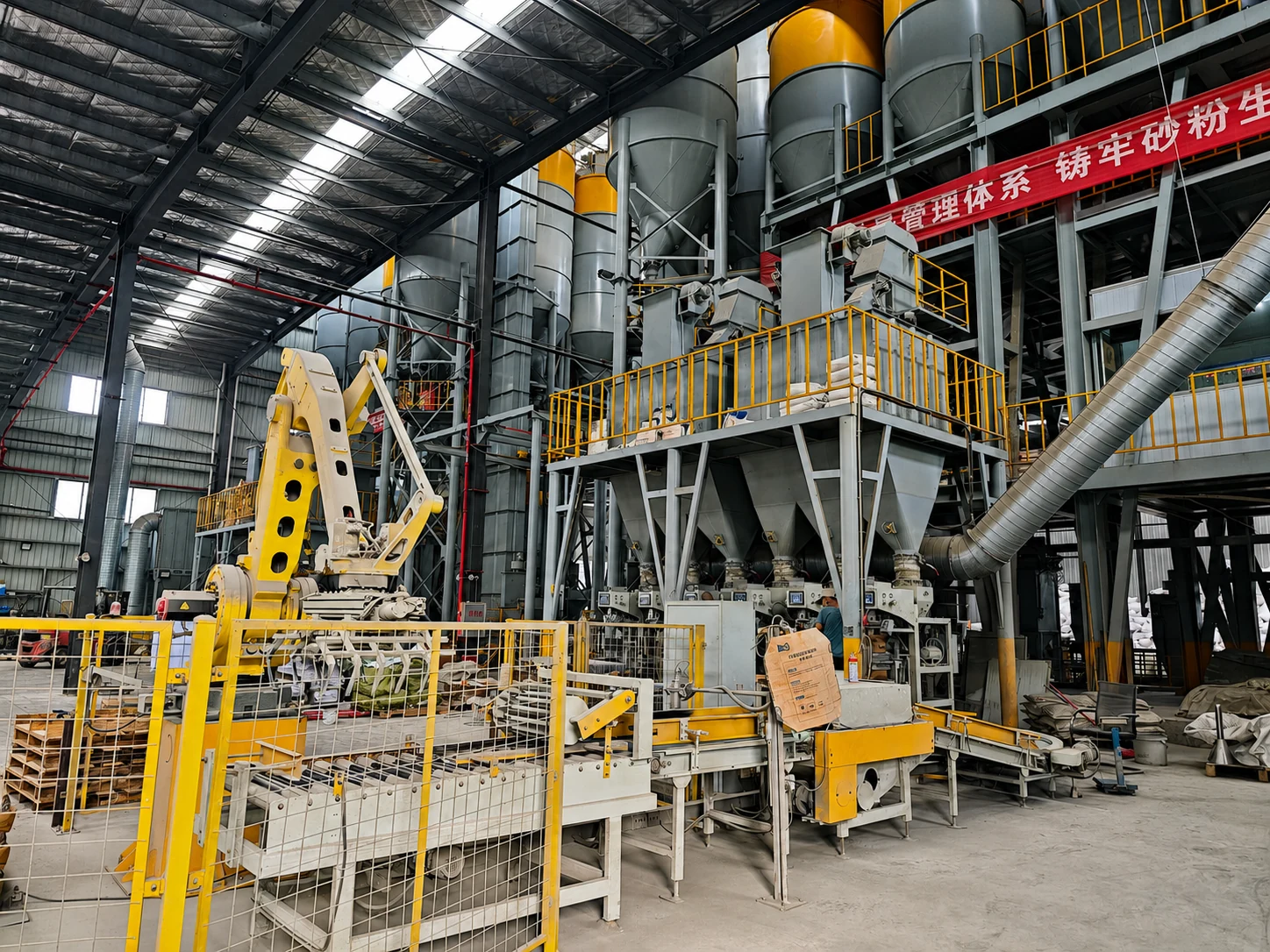
Specification fields to fix before you request a quotation
Use this checklist as the minimum content of your brief. A supplier who receives all of it can respond with a specific product and a comparable price; a supplier who receives part of it will respond with a range.
- Product type, application, and whether it is a tile adhesive, levelling compound, or both.
- Substrate, prepared condition, and substrate moisture status.
- Tile or covering type and size, where relevant.
- Service environment: interior or exterior, wet or dry, heated, freeze-thaw exposure.
- Required layer thickness, minimum and maximum.
- Strength or classification requirement with standard, edition, and test method.
- Open time, slip resistance, or other workability requirements that matter on site.
- Water addition range and mixing instructions, so that on-site practice can match the laboratory basis.
- Bag weight, pallet configuration, and private-label requirements.
- Quantity, destination, Incoterm, and delivery schedule.
The values above differ by product and project. Confirm the applicable figures against the final formulation rather than generalising from a catalogue range, and let the supplier state any open point explicitly rather than filling it in silently.
Site and storage factors importers often overlook
- Climate at destination: a product tuned for a European temperate site may need different working time in a hot, dry market. State the destination climate.
- Installer skill: if the receiving market uses different mixing practice, the specification should state the water addition range and mixing duration, and the bag instructions should match the market's language.
- Shelf life and turnover: cementitious powders age. State the expected shelf life and the inventory turnover so that the bag coding and date marking support it.
- Warehouse conditions: humidity and stacking height affect whether the delivered pallets remain usable. State the storage environment you expect the product to sit in.
- Assumed compliance claims: destination markets have different marking and labelling expectations. Identify them with the buyer's qualified adviser before the artwork is printed, not after the container ships.
Questions buyers ask
Can one product serve as both tile adhesive and levelling compound?
They perform different jobs and are normally specified separately. A product marketed for multiple uses can be valid for a defined application, but the specification should state which application you are buying for, and the evidence should support that application.
How do I compare coverage between suppliers?
Fix the thickness and the trowel or application method, then convert every quotation to coverage per square metre at those fixed conditions. Coverage quoted at "typical" thickness is not comparable.
Is a stronger tile adhesive always better?
Not necessarily. Higher strength often comes with reduced open time or flexibility. Rank your priorities — for large-format or moving substrates, deformation capacity may matter more than peak adhesion.
What causes hollow spots under tiles?
Common causes include insufficient adhesive coverage, incorrect trowel size, dust or contamination on the substrate, exceeding open time before placing the tile, and substrate movement. A specification cannot compensate for application practice, which is why open time and trowel requirements must be stated.
How much sample do I need for a meaningful trial?
Enough to complete a representative area with the intended method: enough material to mix at the correct water ratio and to lay a panel that can be inspected after curing. Very small samples usually test the bag, not the product.
Should the bag carry the installation instructions?
The bag should carry the essential application data in the destination market's language: water addition range, mixing time, working time, thickness limits, and any warning statement. Agree the exact wording during the artwork stage.
Next step for your project
Tile adhesive and self-levelling mortar selection becomes straightforward once the substrate, thickness, environment, and classification requirement are written down and sent to every supplier in the same form.
Send your application details through our inquiry page. We will review them against our dry-mix product range and confirm which specification, sample, or test evidence is required for your project.