
Insulation, Waterproofing and ALC Mortars: Specifying Speciality Dry-Mix Products
Direct answer: Insulation, waterproofing, acoustic and ALC mortars are system products, not commodities. This guide explains how to specify them by performance rather than by name, which evidence supports each claim, and why the surrounding build-up often decides the result more than the mortar alone.
Why speciality mortars cannot be bought by name
Terms like "insulation mortar", "waterproofing mortar", and "ALC mortar" describe a family of products rather than a fixed specification. Two suppliers can both quote a "waterproofing mortar" and deliver materials with different strength, flexibility, and crack-bridging behaviour. The buyer's protection is to specify by function, environment, and test method.
| Product family | Primary function | The specification field that matters most |
|---|---|---|
| Thermal insulation mortar | Contribute to the thermal performance of a wall assembly | Design thermal value at the installed thickness, and the system it belongs to |
| Waterproofing mortar | Resist water penetration under a stated exposure | Exposure condition, substrate movement, and crack-bridging expectation |
| Acoustic mortar | Contribute to impact or airborne sound reduction | The assembly tested, not the mortar in isolation |
| Repair mortar | Restore profile, cover, or surface condition | Repair thickness, substrate preparation, and compatibility with the parent concrete |
| ALC and block mortar | Join or coat masonry units with matched movement behaviour | The unit being bonded and its absorption and movement characteristics |
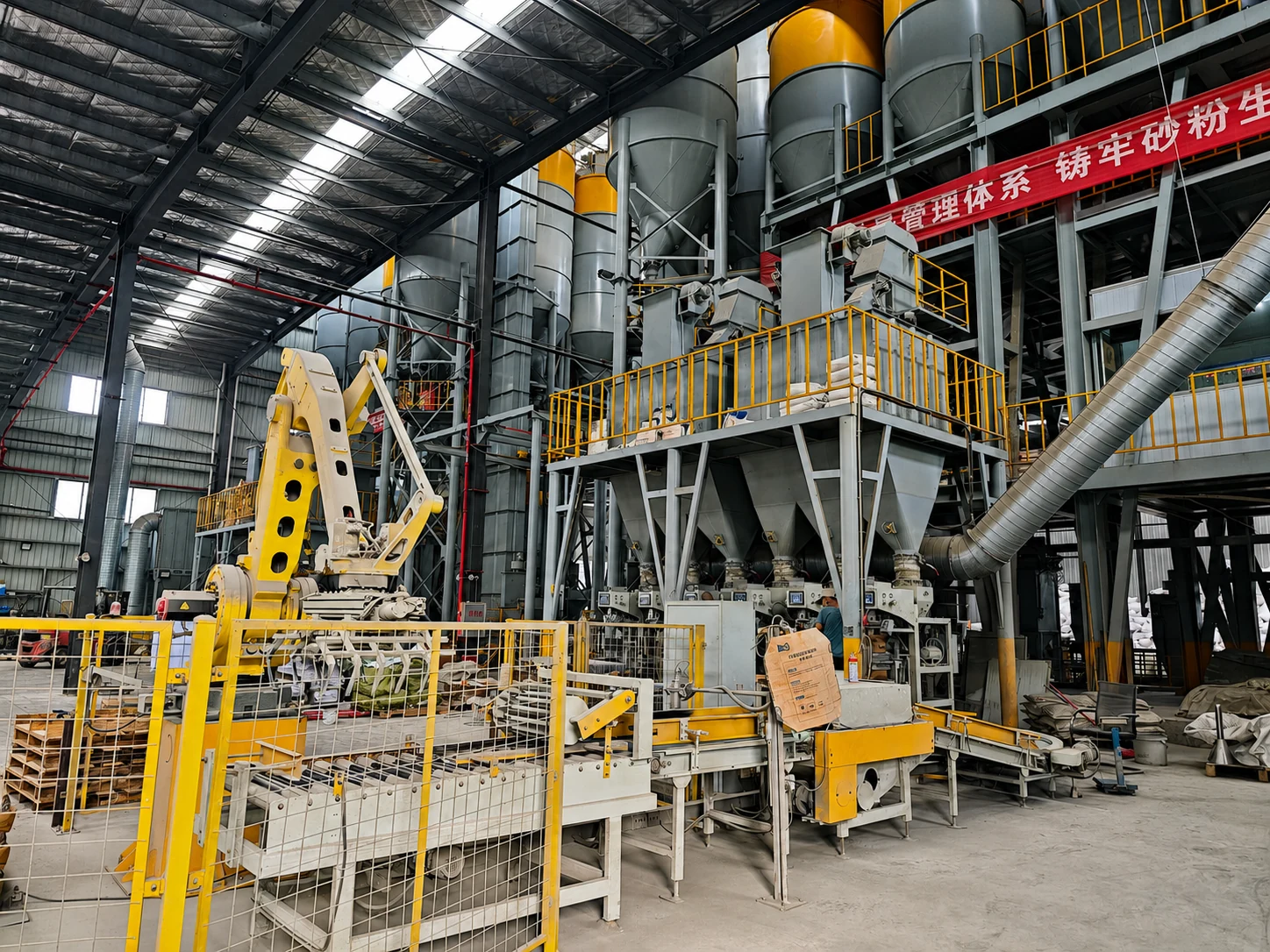
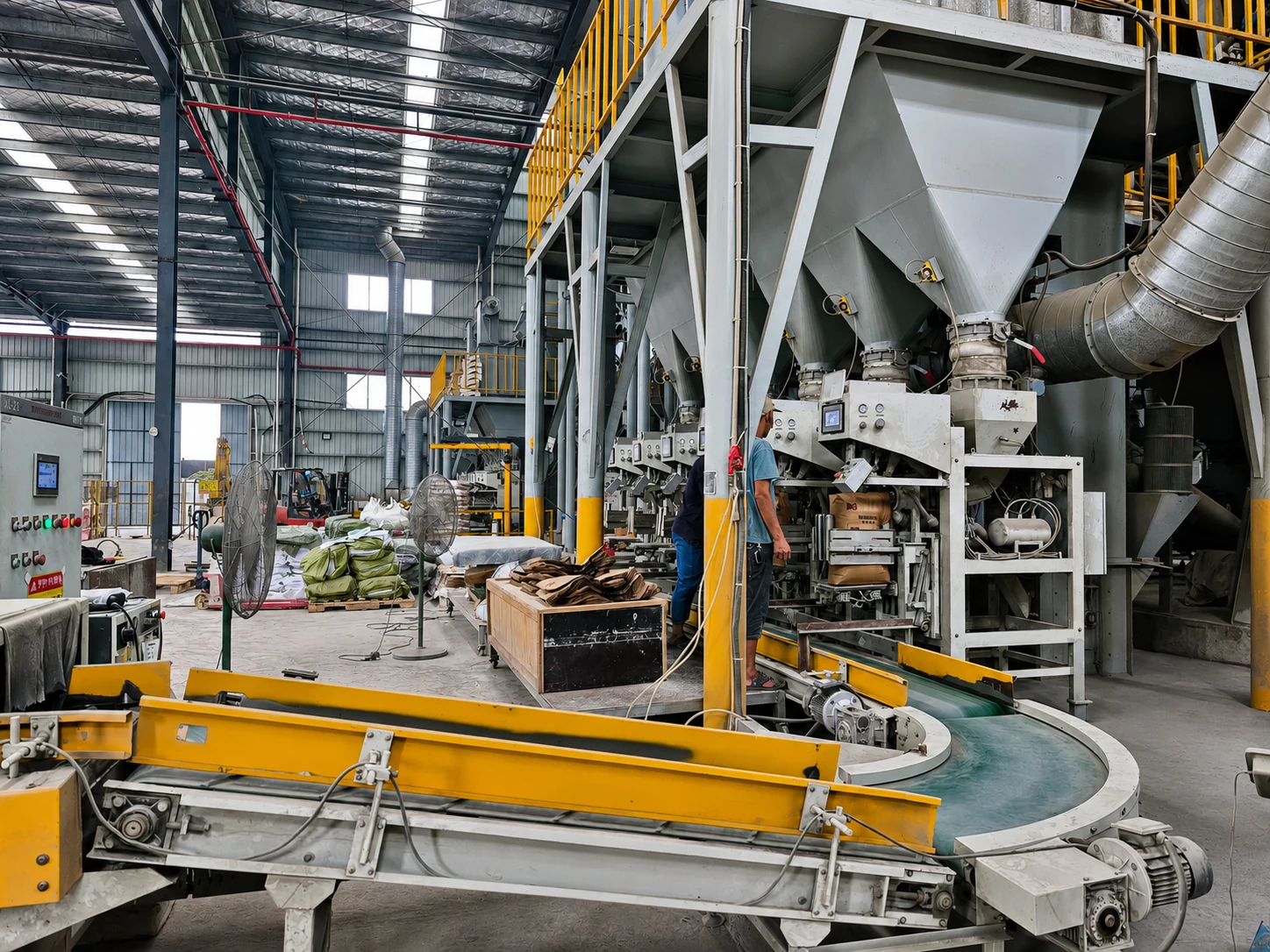
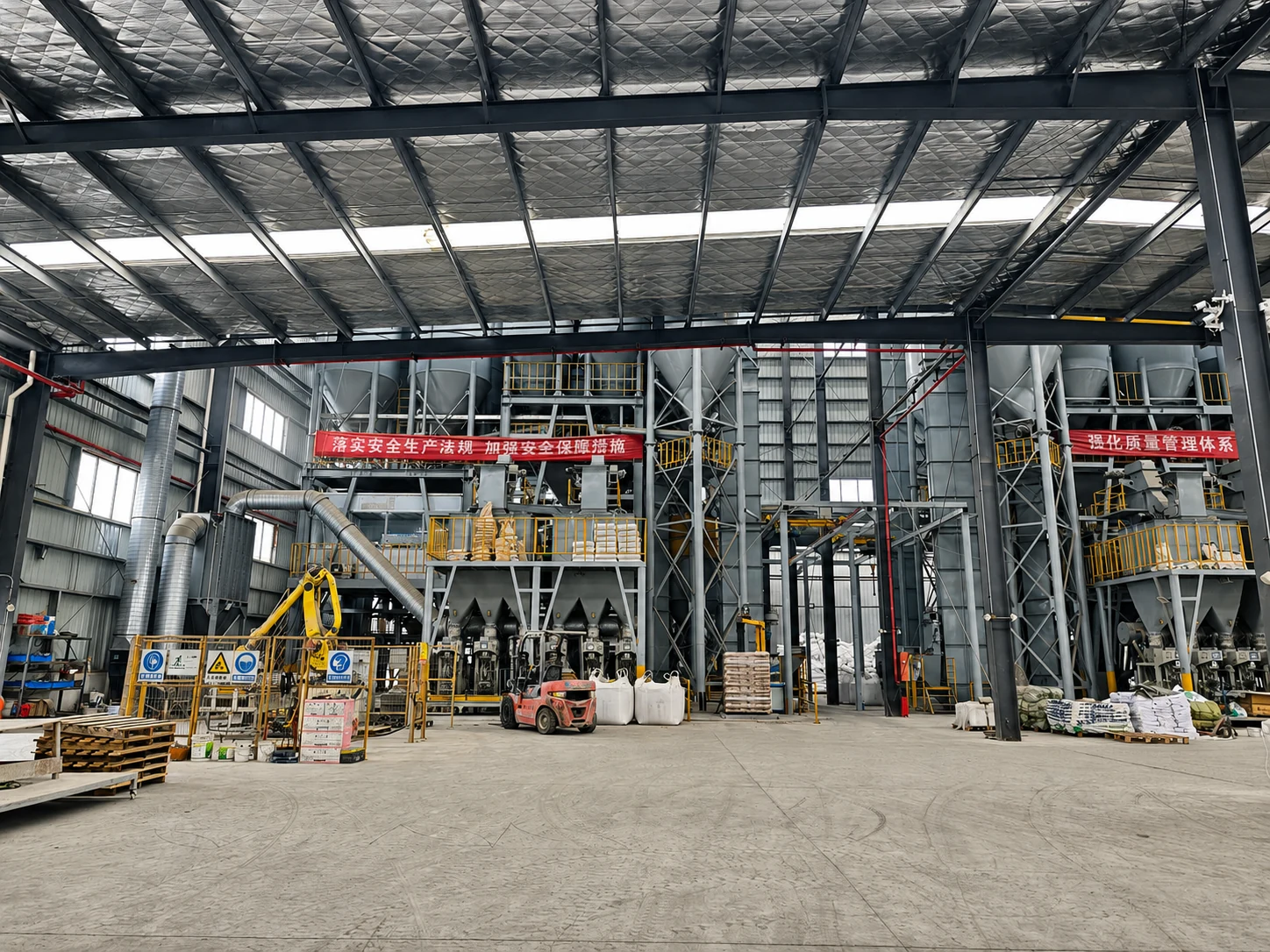
Guangdong Qingshuang Energy-Saving Materials Co., Ltd. manufactures dry-mix construction materials covering wall, floor, insulation, waterproofing, acoustic, repair, and decorative applications. Because the applicable technical values depend on the formulation and the project, they should be confirmed against the selected product rather than assumed from a family description.
Thermal insulation mortar: specify the system, not just the layer
Insulation mortar is usually one layer in a build-up that also includes a substrate, possibly a primer or bonding layer, a reinforcement mesh, a base coat, and a finish. The thermal performance of the assembly depends on all of them.
- State the assembly. Name the substrate and every layer above the insulation mortar, and say which layer carries the reinforcement.
- State the design thickness. Thermal contribution is a function of installed thickness. A value quoted without a reference thickness cannot be checked.
- State the target performance basis. Whether you are working to a regulatory requirement, a project target, or a client specification changes which evidence is relevant.
- State the exposure. Exterior facades see rain, wind, thermal cycling, and freeze-thaw. Interior applications do not. The same family may not serve both.
- State who owns the system. If a system approval or certification is required at destination, confirm whether the supplier's scope covers it or whether the system holder must provide it.
Density, strength, and thermal performance interact. A change requested in one usually affects the others, which is why a late change to a thermal target should be treated as a specification revision with technical and commercial consequences, not as a simple substitution.
Waterproofing mortar: classify the exposure first
Waterproofing performance is only meaningful against a defined exposure. Start by classifying where the water comes from and how the structure moves.
| Exposure | Conditions to state | Evidence to request |
|---|---|---|
| Below grade / retaining | Water head, soil chemistry, drainage design, whether the structure is drained | Product-specific test results for the relevant property, with method and date |
| Wet interior area | Continuous wetting, cleaning chemicals, temperature range | Test evidence for the exposure, plus compatibility with the finish layer |
| Exterior horizontal | Rain, ponding, UV, thermal movement, foot traffic | Evidence for movement accommodation and for surface durability |
| Repair of an existing layer | Condition of the existing waterproofing, compatibility, bond preparation | Compatibility statement, plus a trial area result |
State the movement expectation explicitly. Structures move, and a rigid layer over a moving substrate cracks. If crack-bridging behaviour matters, ask for it as a named property with a test method, and remember that joints and transitions are detailing decisions the mortar cannot substitute for.
Acoustic and repair mortars: performance in plain terms
For acoustic applications, sound reduction belongs to the assembled floor or wall, not to a single material. Specify acoustic mortar by the assembly it sits in and by the result you must achieve, then ask the supplier to state clearly what its product contributes and what it does not.
- Impact sound: state the assembly, the floating layer, the resilient layer if any, and the target reduction basis.
- Airborne sound: mass and airtightness usually dominate. State the wall build-up.
- Installation conditions: thickness, edge detail, and flanking paths determine much of the outcome.
For repair mortars, four fields control success: repair depth and area, substrate preparation method, compatibility with the parent concrete in strength and movement, and the curing regime. State the repair depth range, because thin and thick repairs often require different product behaviour.
ALC and blockwork mortars: matching the masonry unit
Autoclaved aerated concrete and other lightweight blocks move and absorb water differently from dense concrete. The mortar has to match the unit, not the other way around.
- Name the unit: ALC block, concrete block, calcium-silicate, clay brick, or a mixed wall. Include density and compressive strength class where known.
- State joint thickness and method: thin-bed adhesive or conventional mortar bed. The method determines the product family.
- State the absorption condition: whether units are pre-wetted or coated, and how.
- State the finish layer: render, plaster, tile, or coating. The bond between the mortar and the next layer is a separate requirement.
- State the movement strategy: where movement joints occur and who details them.
Block walls crack for reasons that are rarely the mortar alone: foundation settlement, thermal movement, missing movement joints, and differential movement between materials. Include those in the design discussion rather than expecting a formulation change to solve them.
The evidence set for speciality products
Speciality products carry stronger claims than commodity mortars, so the evidence bar should also be higher. Ask for evidence in the right category for each claim.
- Product-specific test reports: named product, named method, named test date, and a sample reference that can be connected to production.
- System documents: where performance depends on the assembly, ask for the assembly documentation that supports the claim.
- Management-system certificates: useful for supplier screening, but they do not substantiate a thermal value, a waterproofing result, or an acoustic figure.
- Compatibility statements: for products used over an existing layer or under a specific finish.
- Application instructions: water addition, mixing, thickness limits, curing, and working time — the instructions that make the difference between the laboratory result and the site result.
Keep unknown values out of public claims. If a property has not been substantiated for the final formulation and the intended application, it should stay an open point until it is confirmed — including on the packaging artwork.
Packaging, storage and site handling
- Bag construction: speciality blends can be more sensitive to moisture and segregation than standard mortars. Agree the liner and handling requirements.
- Unit weight: smaller units may suit site handling on refurbishment projects; state the preference and confirm the tolerance.
- Batch and date coding: state the coding format required for traceability and shelf-life management.
- Labelling: state the language, the required application data, and any destination-specific warning or marking requirement.
- Pallet and container plan: confirm bag count, pallet type, and the loaded weight per container so receiving equipment can handle it.
- Storage at destination: state the warehouse conditions you expect, and agree the shelf life and turnover assumption that makes the order viable.
Questions buyers ask
Can I use one insulation mortar for both interior and exterior walls?
Only where the product is specified for both and the surrounding assembly is designed for both. State the exposure and the full build-up, and ask the supplier to confirm the product's intended application rather than assuming a single product covers everywhere.
Does a waterproofing mortar replace a membrane?
They solve different problems. A mortar layer can provide water resistance for a defined exposure, while a membrane may be required for movement accommodation, drainage detailing, or a specific assurance regime. State which function you are buying.
How do I verify an acoustic claim?
Ask for the assembly that was evaluated and the result basis, then confirm that your build-up matches the evaluated one in mass, layer order, and edge detail. A material-only figure cannot be transferred to a different assembly.
What is the most common cause of failure in blockwork rendering?
Substrate preparation and movement detailing account for a large share: dusty or unstable surfaces, mismatched absorption, missing reinforcement at stress points, and absent movement joints. Specify those alongside the mortar.
Which speciality product should a first-time importer start with?
Start with the product whose application you can describe most completely and whose evidence requirement you can meet. A well-defined, narrower specification is easier to verify than a broad multi-purpose claim.
How should changes be handled after approval?
Issue a dated revision, confirm the technical and commercial effect in writing, and record which revision is controlled. For speciality products, a formulation change can invalidate earlier evidence, so re-confirmation may be required.
Next step for your project
Speciality dry-mix products are easier to buy when they are specified by function, exposure, and evidence rather than by family name. Prepare the application, substrate and full build-up, exposure conditions, required thickness and performance basis, packaging requirements, quantity, destination, and delivery window.
Send those details through our inquiry page. We will match the request against our dry-mix product range and confirm what must be specified, tested, or documented for your project.